" height="73.48475353550086px" id="SyTAVAAl8" transform="translate(0 41.515)" width="80px"/><path d="M 37.093 41.833 C 37.87 43.454 36.955 45.351 35.608 46.373 C 34.036 47.566 32.063 46.432 31.559 44.52 C 31.14 42.932 31.415 40.379 31.452 39.919 C 32.094 31.876 39.078 10.393 48.18 13.508 C 53.555 15.348 51.846 21.45 48.464 24.546 C 54.765 30.617 51.726 35.983 44.391 38.429 C 43.768 38.638 42.505 38.751 42.054 38.713 C 41.039 38.628 39.956 38.381 39.101 37.825 C 37.598 36.847 36.636 40.756 37.093 41.834 Z M 46.43 20.927 C 47.713 16.218 43.737 17.334 42.549 20.986 C 42.381 21.502 42.724 22.047 43.264 22.098 C 44.285 22.196 45.805 22.399 46.43 20.927 Z M 44.18 33.111 C 47.588 30.721 47.181 27.615 42.556 27.936 C 41.268 28.025 40.056 28.712 39.431 29.844 C 38.641 31.279 39.322 32.421 40.832 33.282 C 41.882 33.88 43.192 33.806 44.18 33.111 Z M 23.512 15.025 C 19.071 16.637 7.116 21.441 2.089 23.504 C 1.357 23.805 0.479 23.53 0.134 22.816 C -0.358 21.797 0.575 20.799 1.817 18.216 C 4.073 13.528 6.863 9.92 11.823 5.928 C 15.4 3.049 24.137 -1.797 26.735 0.685 C 29.121 2.963 22.091 3.919 16.574 8.443 C 15.863 9.026 13.636 11.143 12.12 12.784 C 11.724 13.213 12.213 13.874 12.737 13.618 C 17.619 11.23 24.027 7.751 28 9.559 C 36.442 13.401 29.511 12.847 23.509 15.026 Z M 16.48 38.373 C 6.23 41.867 8.18 25.951 14.704 22.524 C 15.241 22.242 15.728 21.881 16.198 21.494 C 18.424 19.658 26.932 20.449 25.682 23.66 C 25.46 24.23 25.317 24.829 25.239 25.435 C 24.588 30.494 20.82 36.387 16.48 38.372 Z M 18.106 30.15 C 18.999 28.896 20.646 27.603 20.456 26.131 C 20.39 25.625 19.826 25.346 19.374 25.581 C 16.086 27.286 12.042 36.862 16.955 31.613 C 17.379 31.161 17.746 30.656 18.106 30.151 Z" fill="rgb(255, 75, 103)" height="46.86223523680679px" id="P1HRdw3wa" transform="translate(7.447 0)" width="51.87837056814515px"/></g></svg>)

我_你 (I_YOU)
exhibition | multimedia | 2026
In many Asian families, love is rarely spoken aloud. It’s cooked, served, and expressed through quiet acts of care. For many parents, saying “I love you” can feel unfamiliar, and that silence can carry across generations, shaping how emotion is expressed and sometimes leaving behind unspoken wounds.
我 __你 reflects on cultural identity while touching on intergenerational trauma.


01
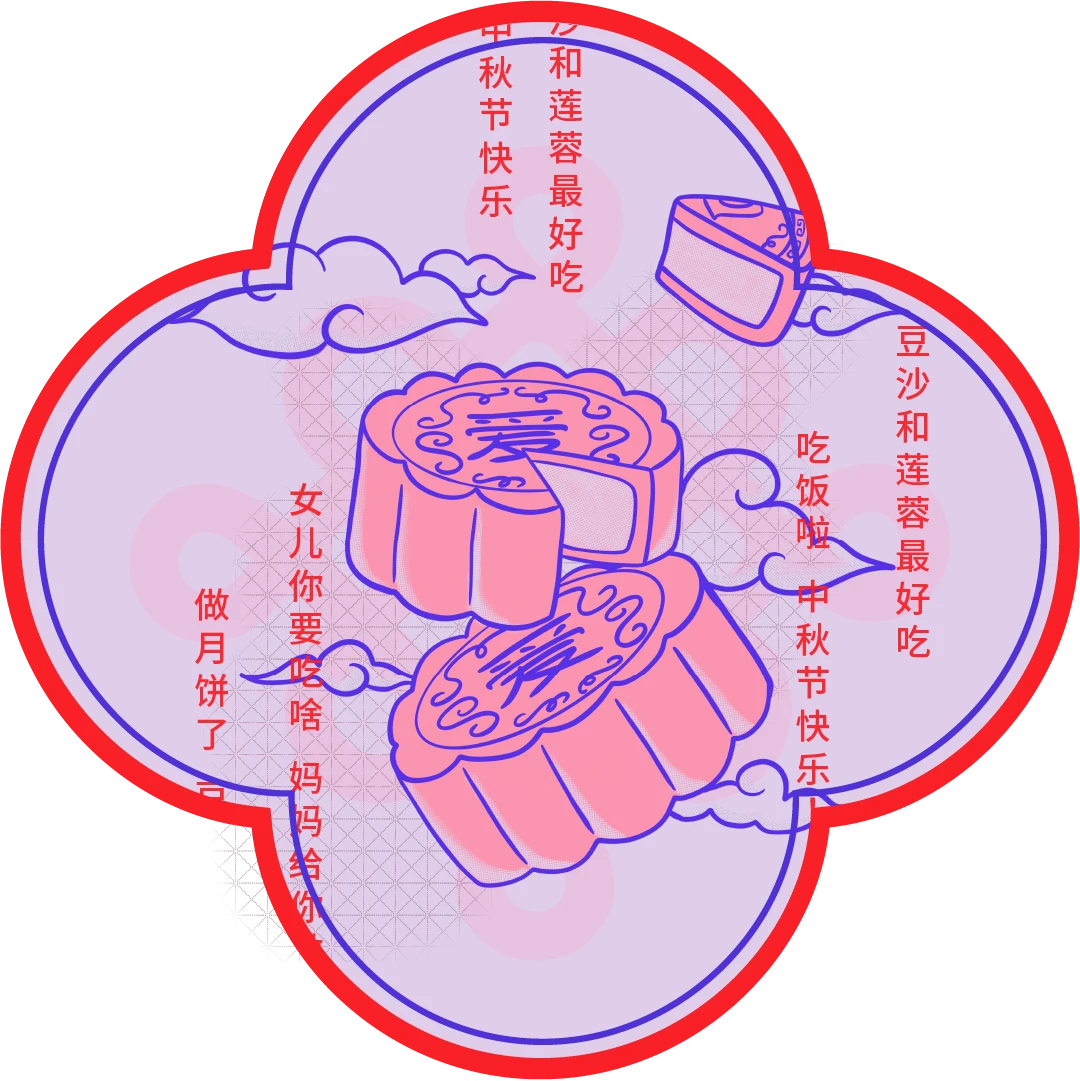
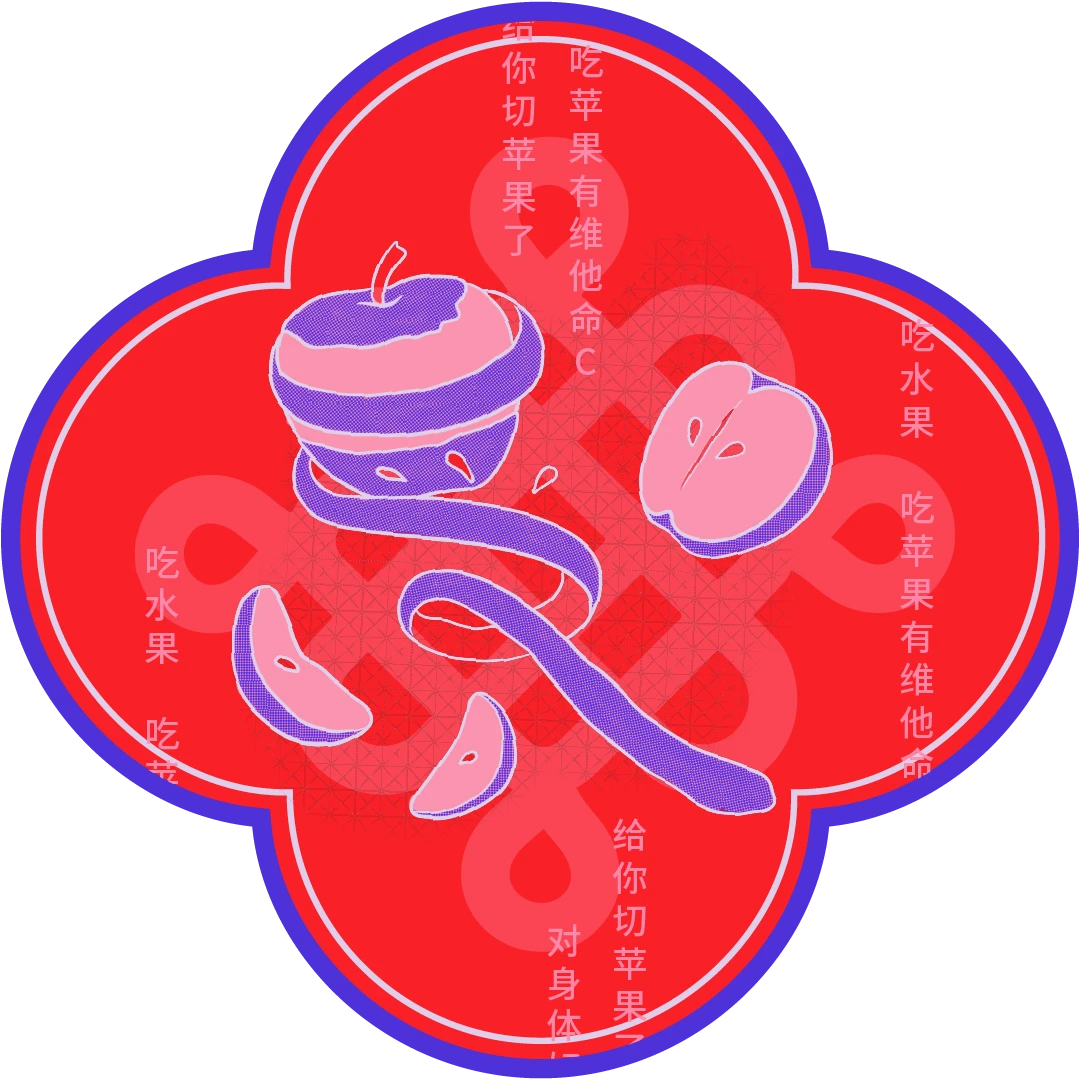
The work draws from the phrase “I love you” (我爱你), with “love” intentionally removed and replaced by illustrations of Chinese comfort foods. They fill the space between “I” (我) and “You” (你), standing in for the care our parents express without words. The character for “love” is also hidden in each panel within the food illustrations.
There are 8 panels in quatrefoil shapes, both holding significance in Chinese culture, symbolizing luck, fortune, and prosperity. Spread across the panels, the food holds both the presence of love and the distance created by its absence in language.



02
The words are common phrases Asian parents would say, such as “Have you eaten?” and “What would you like to eat?”. I had my parents handwrite the words to give it a more personal touch, using light gray vinyl so they wouldn’t overpower the panels but still stand out from the darker wall.
03
I intentionally used only Chinese characters with no translations to reflect the discomfort many immigrant parents experienced when they first came to the U.S. and struggled with English. The confusion viewers may feel mirrors what it’s like to encounter language you don’t fully understand, while also exploring cultural differences in how love is expressed.
02
The words are common phrases Asian parents would say, such as “Have you eaten?” and “What would you like to eat?”. I had my parents handwrite the words to give it a more personal touch, and then scanned and cut them out on light gray vinyl so they wouldn’t overpower the panels but still stand out from the darker wall.
03
For the entire body of work, I intentionally used only Chinese characters with no translations to reflect the discomfort many immigrant parents experienced when they first came to the U.S. and struggled with English. The confusion viewers may feel mirrors what it’s like to encounter language you don’t fully understand, while also exploring cultural differences in how love is expressed.


04
I designed a recipe zine people could take with 3 recipes for my favorite dishes on the wall so others can take the same love home.
04
I designed a recipe zine people could take with 3 recipes for my favorite dishes on the wall so others can take the same love home.
04
I designed a recipe zine people could take that includes 3 recipes for my favorite dishes on the wall so others can take the same love back with them.

05
A bowl flipbook was also designed to would further explain the concept in a personal narrative. Dumplings were featured since my grandpa would make for me even when he was chronically ill; tomato egg noodles, one of my favorite dishes my grandma would make for me, and apple slices since fruit is a well known apology food that many Asian parents use to say sorry or I love you.


